 Skip to content

Choosing the best stainless steel grade for cutlery sets is essential to ensure durability, corrosion resistance, and lasting shine. Different grades vary in strength, maintenance needs, and suitability for daily or professional use. Understanding these differences helps you select cutlery that maintains its quality and appearance over time. This guide explains how to identify the right grade for your specific needs.
Stainless Steel Grades
18/10
18/10 stainless steel stands out as the top stainless steel grade for cutlery. This grade contains between 16% and 18% chromium and 8% to 10% nickel, which gives it a bright shine and strong resistance to rust. The high chromium content protects the surface, while nickel adds flexibility and strength.
| Element | Content Range |
|---|---|
| Chromium | 16% – 18% |
| Nickel | 8% – 10% |
Users often choose 18/10 stainless steel flatware for its durability and long-lasting appearance. The main advantages include superior corrosion resistance, strength, and versatility. The main drawback is the higher cost compared to other grades.
| Advantages | Disadvantages |
|---|---|
| Superior Corrosion Resistance | Cost |
| Strength and Durability | Machinability |
| Versatility | Scratch Resistance |
| Not All-Encompassing |
Tip: 18/10 stainless steel flatware works best for families who want cutlery that lasts for years.
18/8
18/8 stainless steel contains 18% chromium and 8% nickel. This stainless steel grade offers good rust resistance and durability for everyday use. Many people find 18/8 stainless steel flatware more affordable than 18/10, while still providing a polished look.
| Feature | 18/8 Stainless Steel | 316 Stainless Steel |
|---|---|---|
| Corrosion Resistance | Decent | Superior |
| Durability | Good | Good |
| Impact and Abrasion Resistance | Good | Good |
| Performance in Marine Environments | Struggles | Excellent |
| Price | More Affordable | Higher |
This grade performs well in most kitchens, but it may not resist rust as effectively as 18/10 stainless steel. It remains a popular choice for those who want quality stainless steel flatware at a lower price.
18/0
18/0 stainless steel contains 18% chromium and no nickel. This stainless steel grade costs less than the others and works well for occasional use. The lack of nickel means it does not resist rust as well as 18/10 or 18/8 stainless steel.
- Pros of 18/0 stainless steel:
- More budget-friendly
- Decent performance for occasional use
- Cons of 18/0 stainless steel:
- May not last as long
- Less effective rust resistance compared to 18/10
People often choose 18/0 stainless steel flatware for large gatherings or as backup sets. It provides a cost-effective option, but it may show wear and rust over time.
Comparing Stainless Steel Flatware
Durability
Durability plays a key role when choosing stainless steel flatware. The table below shows how 18/10, 18/8, and 18/0 grades compare in terms of long-term durability and corrosion resistance:
| Stainless Steel Grade | Chromium Content | Nickel Content | Durability Level | Corrosion Resistance |
|---|---|---|---|---|
| 18/10 | 18% | 10% | Most Durable | High |
| 18/8 | 18% | 8% | Moderately Durable | Good |
| 18/0 | 18% | 0% | Least Durable | Low |
18/10 stainless steel flatware stands out as the most durable option. The higher nickel content increases strength and helps the utensils keep their shine. 18/8 stainless steel offers good durability, while 18/0 stainless steel is more likely to show wear and tear over time.
Laboratory tests also show that higher nickel and chromium content improve the strength and fatigue resistance of stainless steel. Stainless steel flatware with more nickel, like 18/10, resists bending and breaking better than lower grades. This makes it a reliable choice for daily use.
Rust Resistance
Rust resistance is essential for maintaining the appearance and safety of cutlery. The following table compares the rust resistance of each grade:
| Feature | 18/8 Stainless Steel | 18/10 Stainless Steel | 18/0 Stainless Steel |
|---|---|---|---|
| Corrosion Resistance | Good – resists rust and staining well | Excellent – highest resistance to rust and corrosion | Fair – more prone to rust over time |
18/10 stainless steel provides the highest level of rust resistance. The combination of chromium and nickel creates a protective layer that is highly resistant to corrosion. 18/8 stainless steel also resists rust well, but not as effectively as 18/10. 18/0 stainless steel, with no nickel, is more likely to develop rust, especially in humid environments.
Several factors can cause rust in stainless steel flatware. These include exposure to chlorine, moisture, acidic foods, and scratches that damage the protective layer. Austenitic stainless steel, which includes 18/10 and 18/8, is more resistant to corrosion than ferritic grades like 18/0.
Tip: To keep stainless steel flatware resistant to corrosion, dry it thoroughly after washing and avoid contact with harsh chemicals.
Price
Price often influences the choice of stainless steel flatware. Higher grades like 18/10 stainless steel cost more at first, but they last longer and require less maintenance. Lower grades such as 18/0 have a lower initial price but may need to be replaced more often due to lower durability and rust resistance.
| Grade of Stainless Steel | Cost Implication | Expected Lifespan | Maintenance Requirements |
|---|---|---|---|
| Higher Grades | Higher initial cost but lower LCC | Longer lifespan due to better durability | Low maintenance due to corrosion resistance |
| Lower Grades | Lower initial cost but higher LCC | Shorter lifespan, more frequent replacements | Higher maintenance due to susceptibility to corrosion |
Choosing 18/10 stainless steel flatware often saves money in the long run. The higher durability and excellent corrosion resistance reduce the need for frequent replacements. This makes it a smart investment for families and anyone who wants flatware that stays looking new.
Note: Experts agree that 18/10 stainless steel is the best quality for flatware. The increased nickel content improves both durability and shine, making it the top choice for those seeking utensils that are resistant to corrosion and built to last.
Choosing the Best Quality Stainless Flatware
Everyday Use
Selecting the best quality stainless flatware for daily meals involves several factors. Families should consider the design, thickness, and set composition to match their needs. The table below highlights important aspects for everyday stainless steel flatware:
| Factor | Description |
|---|---|
| Design | The style of flatware can enhance the table setting, with options ranging from classic to modern. |
| Quality | Look for solid, well-made flatware; thicker pieces are generally more durable. |
| Set Composition | Consider the number of pieces needed based on family size or entertaining frequency. |
| Brand and Reputation | Research brand reviews to ensure quality and durability. |
| Price | Balance between cost and quality; cheaper sets may suffice for everyday use, but higher quality lasts longer. |
People often choose 18/10 stainless steel for its superior strength and corrosion resistance. Welded construction prevents handles from loosening, and finishes like mirror or satin help protect against scratches. Higher grades of stainless steel resist rust better, making them ideal for frequent use.
Special Occasions
Special occasions call for the best flatware to create a refined dining experience. High-grade stainless steel offers durability and a polished appearance. The following benefits make these types of stainless steel flatware suitable for formal events:
- Durability ensures utensils remain reliable and free from rust or stains.
- Aesthetic appeal enhances the table setting with a bright, elegant finish.
- Ergonomic designs provide comfort and ease of use for guests.
Choosing the best quality stainless flatware for celebrations elevates the meal and leaves a lasting impression. Many hosts select 18/10 stainless steel flatware for its shine and resilience.
Budget Tips
Budget-conscious shoppers can still find quality flatware by considering different grades and shopping strategies. The following tips help maximize value:
- Determine a budget that fits household needs.
- Consider high-quality stainless steel grades like 18/10 for durability, though they often cost $50 and up.
- Look for affordable options such as 18/0 stainless steel, available for $20 to $40.
- Research retailers for competitive prices and use online marketplaces for customer reviews.
- Take advantage of seasonal sales or discounts.
- Purchase comprehensive sets for better overall value.
Flatware prices vary, with decent sets starting around $100-$150. Investing in higher grades like 18/10 stainless steel ensures longevity and a refined look. If the budget is limited, 18/0 stainless steel provides a cost-effective solution, though it may require replacement sooner.
Care and Maintenance
Cleaning
Proper cleaning keeps stainless steel cutlery looking new and extends its lifespan. Hand washing with mild dish soap and warm water works best for forks, knives, and spoons. Avoid abrasive materials and sharp tools, as these can scratch the surface and damage the protective layer.
- Mix one part distilled vinegar with eight parts boiling water for a deep clean.
- Soak forks, knives, and spoons for 15-20 minutes.
- Wipe each piece with a microfiber cloth and polish with cream of tartar if needed.
- Remove stains using a baking soda paste or lemon juice.
- Dry all cutlery immediately after washing to prevent water spots and tarnish.
Regular cleaning removes dirt and salts that can cause corrosion, especially on lower grades of stainless steel.
Storage
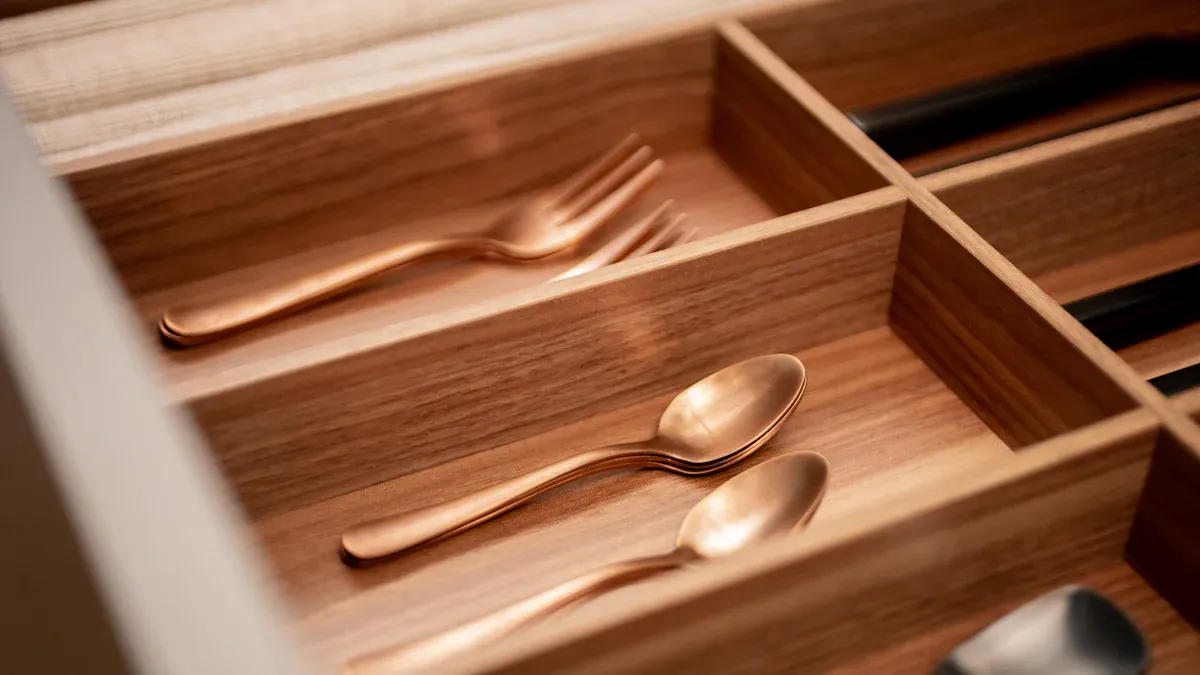
Storing stainless steel cutlery correctly prevents scratches and rust. Place forks, knives, and spoons in separate compartments or organizers. Use a soft liner if stacking is necessary.
- Always dry each piece with a soft cloth before storage.
- Store cutlery in a dry environment to avoid tarnishing and corrosion.
- Sort forks, knives, and spoons into categories for easy access and less wear.
- Regularly check for signs of rust or tarnish and address them quickly.
A table below shows how storage conditions affect stainless steel cutlery:
| Factor | Impact on Stainless Steel Cutlery |
|---|---|
| High Humidity | Promotes tarnishing and corrosion |
| Air Pollutants | Leads to oxidation and affects appearance |
| Moisture | Causes rust, so proper drying is essential |
Preventing Rust
Rust prevention starts with keeping stainless steel cutlery clean and dry. Rinse forks, knives, and spoons thoroughly to remove soap residue. Dry each piece right away with a soft cloth.
- Avoid harsh cleaners and abrasives that can damage the protective layer.
- Remove cutlery from the dishwasher as soon as the cycle ends.
- Store flatware away from other metals to prevent contact corrosion.
- Quickly clean off acidic foods like ketchup or vinegar.
- Use stainless steel polish or apply a protective coating for long-term storage.
The chromium in stainless steel forms a passive layer that protects against rust. Regular care helps even lower grades of stainless steel last longer and maintain their shine.
Conclusion
18/10 stainless steel stands as the top choice for cutlery because it offers the highest durability and excellent resistance to rust. Stainless steel cutlery made from 18/10 stainless steel contains 18% chromium and 10% nickel, which gives it a bright, polished look and strong corrosion resistance. While 18/8 stainless steel also performs well, with slightly less nickel, 18/0 stainless steel features no nickel and costs less but shows more wear and may rust over time.
| Grade | Corrosion Resistance | Durability | Price Range |
|---|---|---|---|
| 18/10 | High | Very Durable | $50 and Up |
| 18/8 | Moderate | Durable | $20 to $40 |
| 18/0 | Low | Less Durable | $20 to $40 |
Selecting the right stainless steel grade depends on lifestyle and budget. Proper care, such as hand washing and thorough drying, helps all grades last longer and look their best. By following these tips, anyone can enjoy attractive and reliable stainless steel flatware for years.


