 Skip to content

Stainless steel cutlery is an everyday essential, yet few stop to consider the intricate journey it takes from raw metal to the polished utensils on our dining tables. Behind the simple elegance of a fork, knife, or spoon lies a complex blend of metallurgy, precision engineering, and skilled craftsmanship.
Understanding how stainless steel cutlery is made not only reveals the technological marvels behind its production but also highlights the careful attention to quality and durability that ensures these utensils last for years. In this article, we will explore each stage of the process, from selecting high-quality steel to shaping, polishing, and finishing the cutlery, giving a glimpse into the transformation of raw metal into functional art.

Stainless Steel Cutlery Materials
Alloying Process
Manufacturers select high-grade 18/10 stainless steel for most stainless steel cutlery. This alloy contains 18% chromium and 10% nickel. Chromium increases resistance to rust, while nickel adds shine and strength.
The alloying process blends these metals with iron. Workers heat the mixture in large furnaces until it melts. They then pour the molten metal into molds to form solid steel slabs.
Material Blanking
After cooling, the steel slabs move to the blanking stage. Machines cut the slabs into flat pieces called blanks. Each blank matches the rough shape of a knife, fork, or spoon.
Blanking prepares the material for further processes. Workers inspect each blank for defects. Only flawless blanks continue to the next steps in making stainless steel cutlery.
A table below shows the typical composition of 18/10 stainless steel:
| Element | Percentage (%) |
|---|---|
| Chromium | 18 |
| Nickel | 10 |
| Iron | 72 |
Shaping and Forging
Hot Forging Knives
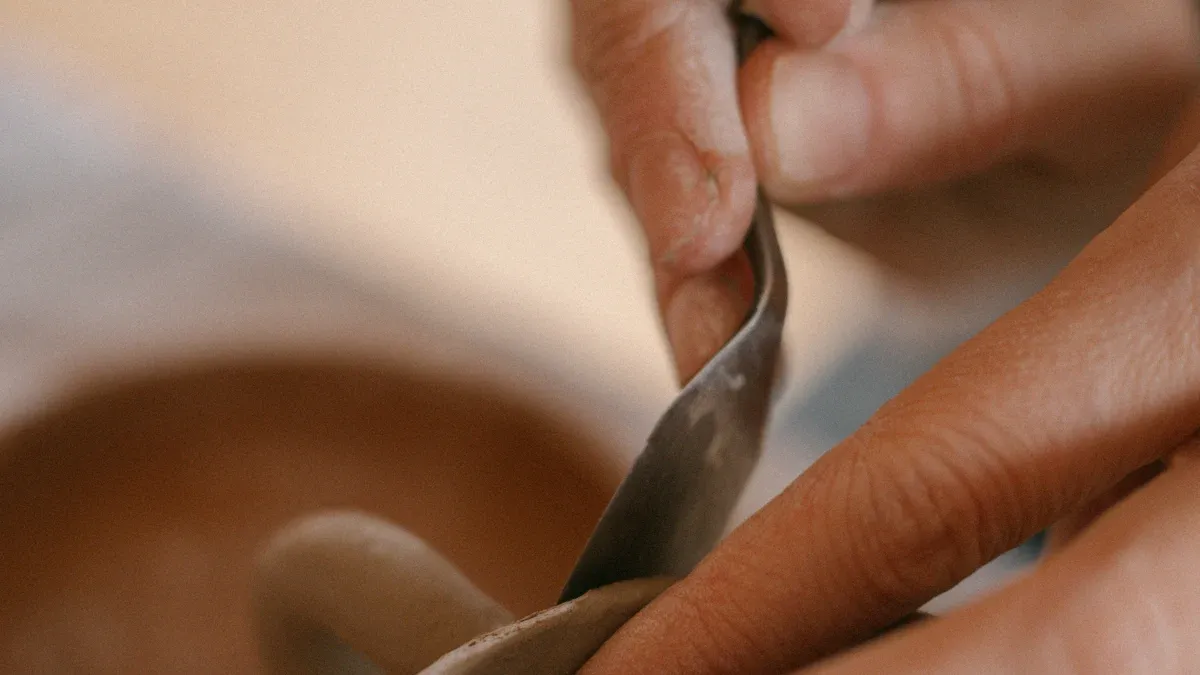
Manufacturers use hot forging to shape knife blanks. Workers heat the steel blanks to high temperatures, making the metal soft and workable. They then press the heated blanks into molds that form the basic knife shape.
Hot forging creates a dense and strong structure in the metal. This method gives knives the hardness needed for cutting tasks. The process also helps prevent cracks and weak spots in the finished product.
Cold Forging Forks
Forks and spoons require a different approach. Workers use cold forging, which shapes the metal at room temperature. This method relies on powerful presses to form the blanks into their final shapes.
Cold forging keeps the metal strong and smooth. It works well for utensils that do not need a sharp edge. The process also allows for precise control over the thickness and weight of each piece.
A comparison of forging methods:
| Utensil Type | Forging Method | Temperature | Main Benefit |
|---|---|---|---|
| Knives | Hot Forging | High (heated) | Hardness, durability |
| Forks/Spoons | Cold Forging | Room temperature | Smoothness, control |
Stamping & Rolling
Stamping and rolling are key processes in shaping cutlery. Stamping presses cut and form the profiles of forks, spoons, and knives. Rolling machines flatten and smooth the metal, ensuring even thickness.
Workers use stamping to create the detailed outlines of each utensil. Rolling prepares the surface for later finishing steps. These processes help achieve the consistent quality expected in stainless steel cutlery.
Forming & Patterning
Machining Profiles
Machining shapes each utensil with precision. Workers use computer-controlled machines to trim and refine the edges. These machines create smooth curves and sharp lines that match the design of each piece.
Machining also removes any extra metal left from earlier steps. This process ensures that every fork, knife, and spoon has a consistent profile. Quality checks follow to confirm that each item meets strict standards.
Mold Creation
Mold creation plays a key role in forming complex shapes. Technicians design molds using detailed blueprints. They craft these molds from hardened steel to withstand repeated use.
Manufacturers use these molds to press or cast the metal into its final form. Each mold must fit the exact dimensions of the intended utensil. Accurate molds help maintain uniformity across large batches.
Decorative Patterns
Decorative patterns add style and uniqueness to stainless steel utensils. Designers create patterns using techniques like etching, embossing, or laser engraving. These methods allow for both simple lines and intricate designs.
Some patterns serve a functional purpose, such as improving grip. Others focus on visual appeal. Manufacturers often use automated systems to apply patterns quickly and evenly.
A table below shows common decorative techniques:
| Technique | Description | Purpose |
|---|---|---|
| Etching | Uses acid to create designs | Visual detail |
| Embossing | Raises patterns on the surface | Texture and grip |
| Laser Engraving | Uses lasers for fine detail | Customization |
Forming and patterning give cutlery its final shape and character. These steps combine technology and craftsmanship to produce utensils that are both functional and attractive.
Finishing & Quality Control

Edge Burr Grinding
Workers inspect each utensil for sharp edges or burrs left from earlier processes. They use grinding machines to smooth these rough spots and create safe, comfortable edges. This step ensures that every piece of cutlery feels pleasant to hold and use.
Grinding also helps achieve the correct thickness and shape. Technicians check the edges by hand to confirm quality. Any utensil that does not meet standards returns for further grinding.
Cleaning & Polishing
After grinding, workers clean the utensils to remove dust, oil, and metal particles. They use ultrasonic baths or high-pressure washers for deep cleaning. This process prepares the surface for polishing.
Polishing machines buff the utensils to a bright, mirror-like shine. Some manufacturers use different polishing wheels for various finishes, such as matte or glossy. Polishing not only improves appearance but also adds a protective layer.
A typical cleaning and polishing process includes:
- Ultrasonic cleaning to remove debris.
- Rinsing with clean water.
- Polishing with soft wheels and special compounds.
Final Inspection
Quality control teams examine each utensil before packaging. They check for scratches, dents, or other defects. Inspectors also verify that all pieces match the required size and weight.
Some factories use automated systems with cameras to detect flaws. Others rely on skilled workers for the final check. Only utensils that pass inspection become part of the finished product set.
A table below shows common inspection criteria:
| Inspection Point | What Inspectors Check For |
|---|---|
| Surface Finish | Scratches, stains, polish |
| Shape | Correct form, no warping |
| Edge Quality | Smoothness, no burrs |
| Weight | Consistency, balance |
Manufacturers transform raw stainless steel into polished cutlery through several precise steps. Workers select strong alloys, shape each piece, and add decorative patterns. Inspectors check every utensil for quality before packaging.
Stainless steel cutlery stands out for its durability and resistance to rust. Skilled craftsmanship gives each piece a smooth finish and reliable strength.
Conclusion
From the initial selection of high-quality steel to the precise shaping, polishing, and finishing processes, the journey of stainless steel cutlery is a testament to both technology and craftsmanship. Each fork, knife, and spoon embodies careful engineering, attention to detail, and a commitment to durability, transforming raw metal into objects that enhance everyday dining experiences.
By understanding how stainless steel cutlery is made, we gain a deeper appreciation for the skill, innovation, and care behind these common yet essential tools. Next time you set the table, you can enjoy not just a meal, but the remarkable journey that brought each utensil from steel to table.
FAQ
Why is stainless steel better for cutlery than normal steel?
Stainless steel is highly resistant to rust, corrosion, and staining, making it more durable and long-lasting than normal steel. Its smooth surface is also easier to clean and maintain, ensuring hygiene and preserving the cutlery’s appearance over time.
What is the healthiest metal for cutlery?
Stainless steel is widely considered the healthiest choice for cutlery. It is non-reactive, meaning it won’t leach harmful chemicals or alter the taste of food. High-quality stainless steel is also resistant to bacteria buildup, making it safe for daily use.
What is the best grade of stainless steel for cutlery?
The most common and recommended grades for cutlery are 18/10 and 18/8 stainless steel. These numbers indicate the proportion of chromium and nickel, which enhance corrosion resistance, shine, and durability, ensuring cutlery that remains strong and attractive for years.


